Shame
How to Face What You’re Most Ashamed Of
Chances are, there’s something in your life you feel deeply ashamed about—something you’ve never told anyone, something you can’t even admit to yourself. In this episode, we go deep into the emotion we all experience but almost no one wants to talk about: shame. Where it comes from, why it’s so powerful, how it screws up our lives—and more importantly, how to deal with it.
We cover the biology of shame, the psychology, the evolutionary roots, and how modern life (especially the internet) completely messes with our shame systems. We talk about healthy vs. toxic shame, how it shows up in addiction, relationships, perfectionism, and self-sabotage, and why most of us either try to hide from it or end up being controlled by it. You’ll also hear from members of my team about how shame shaped their lives in surprising ways.
As always, this episode is brutally honest, deeply researched, and sprinkled with a few bad jokes. But more than anything, I hope it gives you the awareness—and the tools—to start facing whatever it is you’ve been avoiding. Because you can’t outrun your shame. But you can learn to live with it.

- 0:00:00 Introduction
- 0:04:35 Chapter 1: Shame's Hidden Architecture
- 0:14:38 Chapter 2: Key Definitions
- 0:18:32 Distinguishing Shame from Guilt
- 0:20:49 State Shame vs. Trait Shame
- 0:21:47 Shame vs. Embarrassment and Humiliation
- 0:24:03 Shame, Trauma, and their Interrelationship
- 0:25:14 Chapter 3: The Neurobiology of Shame
- 0:29:56 The Shame Spiral
- 0:36:04 The Learning Paradox of Shame
- 0:44:12 Chapter 4: The Shame Compass
- 0:47:33 Personal Experiences with Shame
- 0:49:21 Workaholism as a Coping Mechanism
- 0:59:13 The Allure of Shamelessness
- 1:1:15 Chapter 5: Individual, Familial, & Cultural Sources of Shame
- 1:11:05 Geographical Impact on Shame
- 1:13:08 Cultural Values and Shame
- 1:14:35 How the Greater Culture Shapes Shame
- 1:26:12 Chapter 6: Digital Technology & Shame 2.0
- 1:28:02 The Digital Divide
- 1:31:05 The Relationship Between Technology and Anxiety
- 1:33:55 Protection Strategies
- 1:39:21 Chapter 7: Developmental Stages of Shame
- 1:40:19 Understanding the Origin of Shame
- 1:42:57 The Role of Parenting in Shame Development
- 1:56:49 Chapter 8: How Therapy Transformed Our Understanding of Shame
- 2:01:06 Carl Rogers and the Safety Revolution
- 2:07:31 Albert Ellis and the Cognitive Revolution
- 2:11:58 The Influence of Albert Ellis and Carl Rogers
- 2:13:31 The Emergence of Reparenting and Inner Child Work
- 2:17:18 The Rise of Internal Family System
- 2:20:24 Brene Brown's Work on Shame
- 2:27:59 Chapter 9: Tools to Address Your Shame
- 2:40:19 Stoic Principles for Perspective
- 2:47:05 Perspective Shifting Techniques
- 2:58:26 Chapter 10: Tuning Your Shame System
- 3:10:39 Recognizing Unsustainable Shame Patterns
- 3:16:28 Kristen Neff's Self-Compassion Framework
- 3:25:33 Understanding Shame as Obsession and Resentment
- 3:29:53 Overcoming Shame and Personal Growth
- 3:31:39 Takeaways from the Discussion on Shame
- 3:40:40 Conclusion
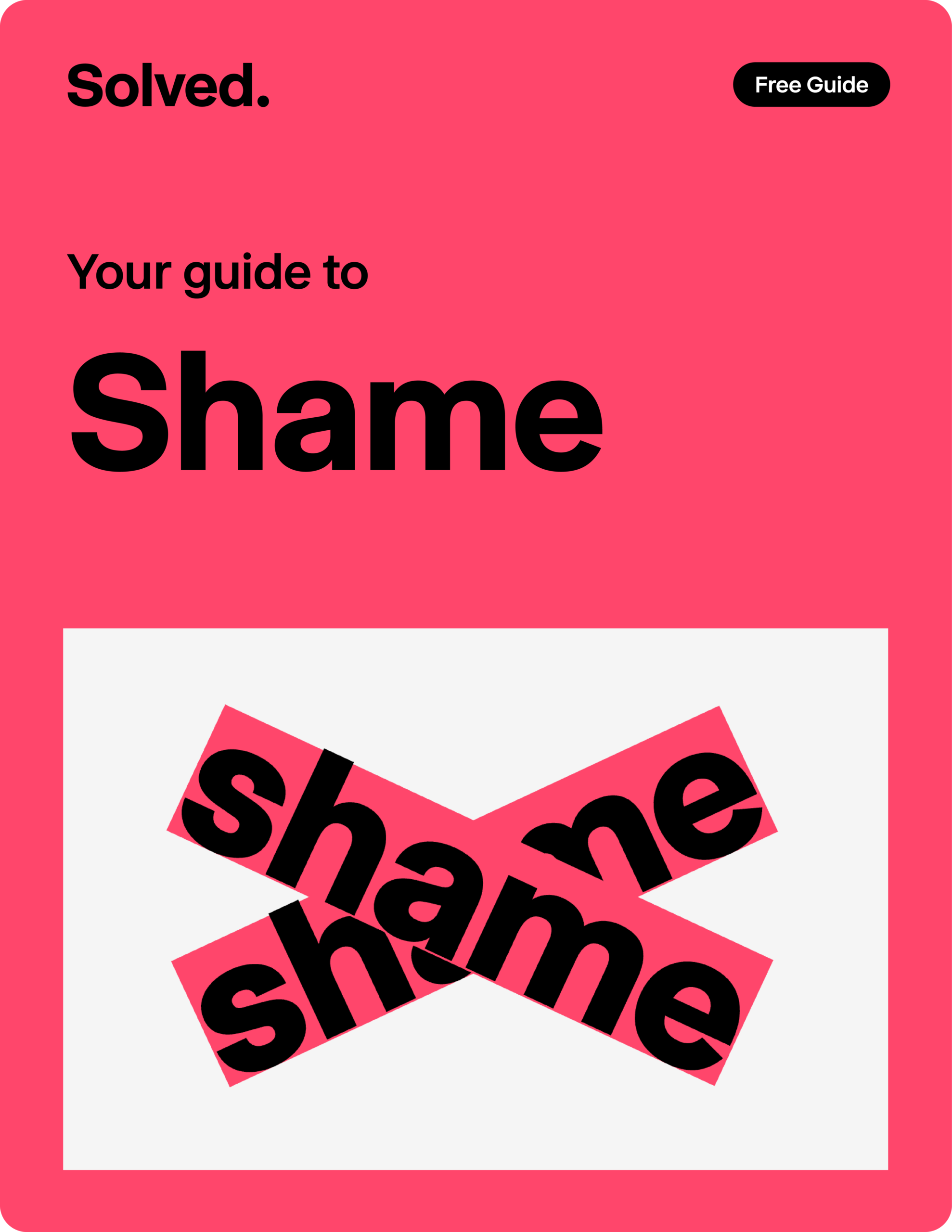
Download your free guide on Shame
Avid reader? Well, you’re in luck. I made you a handy digital reference guide with the sharp recaps you need—because let’s be real, you’ll forget half of this by tomorrow. It’s free. Just join the podcast mailing list, and I’ll send it over.
No spam, no fluff. Just the good stuff. Privacy Policy
References
- Alcoholics Anonymous (AA)
- Leviathan (book)
- Bessel van der Kolk
- The Body Keeps the Score (book)
- Carl Rogers
- Person-Centered Therapy
- Albert Ellis
- Rational Emotive Behavior Therapy (REBT)
- Cognitive Behavioral Therapy (CBT)
- Internal Family Systems (IFS)
- Richard C. Schwartz
- Brené Brown
- Daring Greatly (book)
- Kristin Neff
- Self-Compassion (book by Kristin Neff)
- Donald Nathanson
- Compass of Shame
- Shame and the Social Emotions (June Tangney)
- Chris Germer
- Justine Sacco Case
- Quincy Jones
- Marcus Aurelius
- Meditations (book)
- Overview Effect
- The Atlantic – “The Cruelty Is the Point”
- Jonathan Haidt
- Individualist vs. Collectivist Cultures
- Heal the Shame That Binds You (John Bradshaw)
- Explaining Unhappiness (Peter Spinogatti)
- Michael Lewis (developmental psychologist)
- June Tangney
- Shame and Guilt (book by Tangney)
- John Bradshaw
- Jean Piaget (child development theory)
- Carl Jung (analytical psychology)
- Richard C. Schwartz
- Peter Spinogatti
- Shame and the Exposed Self (book)
- Shame resilience (Brené Brown)
- Good Will Hunting (film)